
The Science of Waterproof: What Makes Rain Boots Truly Water-Resistant
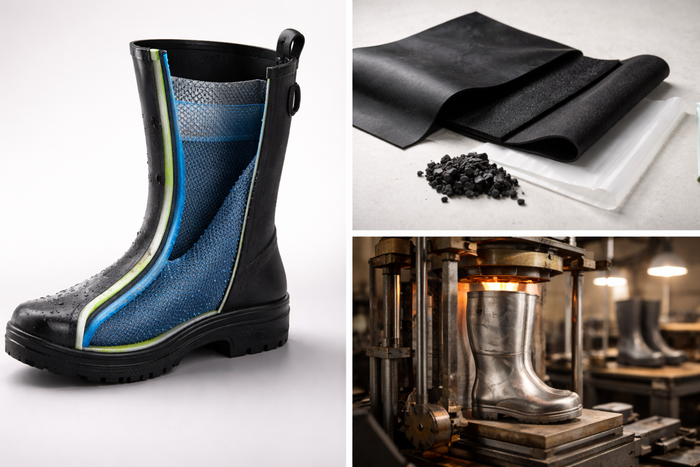
When you slip on a pair of rain boots before heading out into a downpour, you're trusting in some fascinating science to keep your feet dry. But what actually makes rain boots waterproof? Is it just thick rubber, or is there more complex technology at play? Understanding the science behind waterproof footwear can help you make smarter purchasing decisions and properly care for your boots to maximize their protective capabilities.
In this comprehensive guide, we'll explore the materials, manufacturing processes, construction techniques, and innovative technologies that transform ordinary rubber into a reliable barrier against water. Whether you're shopping for everyday rain boots or professional-grade waterproof footwear, knowing what makes boots truly water-resistant will help you choose the right pair for your needs.
Understanding the Difference: Waterproof vs. Water-Resistant vs. Water-Repellent
Before diving into the science, it's essential to understand that "waterproof," "water-resistant," and "water-repellent" describe different levels of protection.
Waterproof boots are engineered to be completely impervious to water infiltration under specific conditions. These boots can withstand at least 1,000mm of water pressure, meaning you can walk through deep puddles, snow, or even shallow streams without water penetrating to your feet. True waterproof boots feature advanced materials, specialized construction techniques, and often incorporate waterproof membranes that prevent any water from entering.
Water-resistant boots offer a degree of protection against moisture but are not fully impervious to water. These boots can typically handle 200mm of water pressure, making them suitable for light to moderate rain or brief exposure to wet conditions. Water-resistant boots have been treated with coatings or made from materials that resist water penetration to a point, but sustained exposure to wet conditions will eventually allow moisture to seep through.
Water-repellent boots have surface treatments that cause water to bead up and roll off rather than being absorbed. This is the lowest level of water protection and is best suited for light rain or brief encounters with moisture.
For true rain boots, we're focusing on waterproof construction—the kind that keeps your feet completely dry in demanding wet conditions.
The Foundation: Natural and Synthetic Rubber
At the heart of most rain boots lies rubber, a material with inherently waterproof properties. But not all rubber is created equal, and the way it's processed dramatically affects its performance.
Natural Rubber: Nature's Waterproof Material
Natural rubber is derived from the latex sap of rubber trees (Hevea brasiliensis). In its raw form, natural rubber is sticky, temperature-sensitive, and loses its structure in hot or cold conditions. However, through a chemical process called vulcanization, discovered accidentally by Charles Goodyear in 1839, natural rubber is transformed into the durable, elastic, waterproof material we rely on today.
The vulcanization process involves heating natural rubber with sulfur and other chemical additives at temperatures between 140-180°C. This heat causes the sulfur to create cross-links between the long polymer chains in the rubber, fundamentally altering its molecular structure. These cross-links prevent the polymer chains from sliding past each other, which eliminates the stickiness and temperature sensitivity of raw rubber.
The result is a material that maintains its flexibility across a wide temperature range, resists wear and tear, and most importantly for rain boots, becomes completely impermeable to water. The tightly cross-linked molecular structure leaves no pathways for water molecules to penetrate, creating a genuine waterproof barrier.
Synthetic Rubber Alternatives
Modern rain boots often use synthetic rubber compounds that offer specific performance advantages:
PVC (Polyvinyl Chloride) is a synthetic plastic that's lighter and more affordable than natural rubber. PVC is inherently waterproof and can be molded into various shapes easily. While PVC boots lack the flexibility and durability of natural rubber, they're perfectly adequate for casual use and light-duty applications.
Neoprene is a synthetic rubber that provides excellent waterproofing along with insulation properties. The cellular structure of neoprene traps tiny air bubbles, which not only blocks water but also provides thermal insulation. This makes neoprene ideal for cold-weather rain boots. Neoprene is also ozone-resistant and can withstand exposure to chemicals, oils, and harsh environmental conditions.
Thermoplastic Polyurethane (TPU) is often used as a coating or overlay on other materials. TPU is waterproof, highly abrasion-resistant, and maintains flexibility in cold temperatures. It's commonly used to reinforce high-wear areas on rain boots or as a waterproof layer over fabric uppers.
Proprietary Synthetic Compounds like RubberHE (used by Kamik) are engineered to combine the best properties of natural and synthetic rubbers. These materials remain flexible at extreme temperatures while offering superior waterproofing and exceptional durability.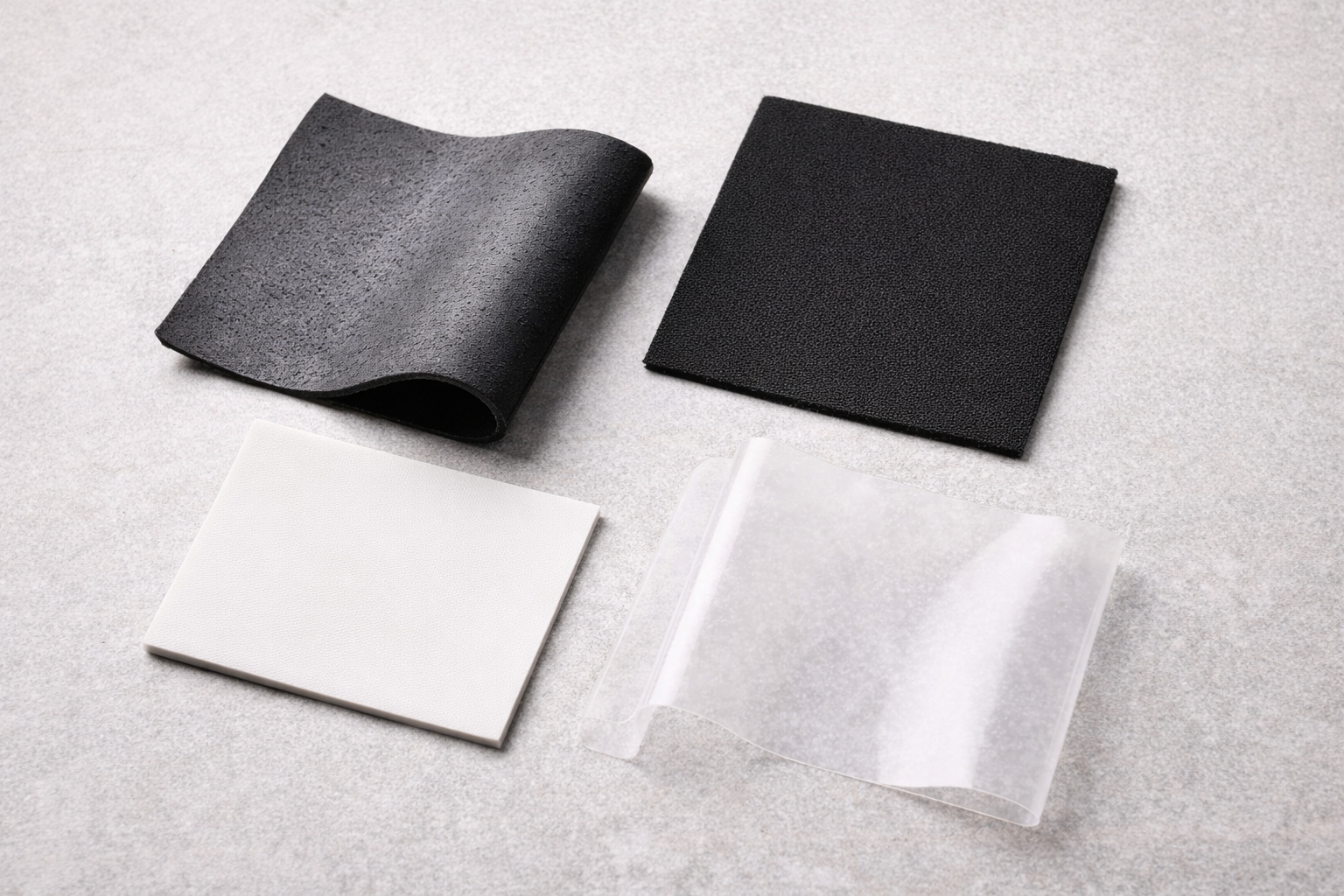
The Vulcanization Process: Transforming Rubber into Waterproof Protection
Understanding vulcanization is key to appreciating what makes quality rain boots truly waterproof.
The Chemistry of Vulcanization
When rubber is vulcanized, sulfur atoms create bridges between the polymer chains in the rubber. Think of raw rubber as cooked spaghetti noodles—the strands slide around easily and have no structural integrity. Vulcanization is like adding cross-pieces between the noodles, creating a stable network that maintains its shape.
The vulcanization process typically occurs in specialized equipment called autoclaves—pressurized ovens that operate at 120-180°C and 140-350kPa of pressure. The combination of heat and pressure, along with the sulfur and accelerating agents in the rubber compound, triggers the chemical reaction that forms the cross-links.
Methods of Vulcanization in Rain Boot Manufacturing
Compression Molding: A pre-measured amount of uncured rubber compound is placed in a mold cavity. The mold is closed and pressure is applied, forcing the rubber to fill the entire mold. Heat activates the vulcanization process. This method is ideal for making thick, complex-shaped boots with excellent detail and consistency.
Injection Molding: Similar to compression molding but more automated. Heated rubber is forced through a nozzle into closed mold cavities. This process offers faster production and consistent quality, making it cost-effective for high-volume manufacturing.
Open Steam Vulcanization: For hand-crafted or artisanal rain boots, assembled boots are placed on aluminum lasts (foot-shaped forms) and loaded onto trolleys. These trolleys enter large autoclaves where saturated steam provides both heat and pressure. The steam's superior heat transfer results in thorough, even curing. Once cured, the boots are cooled and removed from the lasts.
The curing time and temperature are carefully controlled based on the rubber compound's formulation. Proper vulcanization determines the final properties of the boots—their strength, flexibility, waterproofing effectiveness, and longevity.
Why Vulcanization Matters for Waterproofing
Properly vulcanized rubber is completely non-porous at a molecular level. The tight cross-linked network prevents water molecules from finding pathways through the material. Under-vulcanized rubber may have incomplete cross-linking, leaving microscopic gaps that could eventually allow water penetration. Over-vulcanization makes rubber brittle and prone to cracking, which also compromises waterproofing.
Quality manufacturers carefully control the vulcanization process to achieve the optimal balance of flexibility, durability, and waterproof integrity.
Construction Techniques That Enhance Waterproofing
Even the best waterproof materials can fail if the boot's construction creates entry points for water. Several construction techniques address these vulnerabilities.
Seamless Construction
Traditional footwear relies on stitching to join different components, but every stitch creates a potential pathway for water. Modern rain boots increasingly use seamless, molded construction where the entire boot (or the entire lower section) is formed as one continuous piece of rubber.
Injection-molded and compression-molded boots naturally feature seamless construction. For boots assembled from multiple pieces, manufacturers use specialized joining techniques rather than traditional stitching.
Seam-Sealed Construction
When seams are unavoidable, they must be sealed to maintain waterproof integrity. Seam sealing involves applying specialized waterproof tape or liquid sealant to the seams, then heating the tape to bond it with the surrounding material. This creates a continuous waterproof barrier across what would otherwise be a vulnerable junction.
High-quality seam sealing is virtually invisible and just as waterproof as the surrounding material. Poor seam sealing is a common failure point in lower-quality boots.
Vulcanized Attachment of Soles
Traditional footwear glues the sole to the upper, creating a seam that can eventually separate or allow water infiltration. Vulcanized rain boots attach the sole through the vulcanization process itself. The uncured rubber sole and upper are assembled together, then the entire boot is vulcanized as one unit. The heat and pressure of vulcanization cause the rubber components to chemically bond at a molecular level.
This vulcanized attachment is significantly stronger and more waterproof than glued attachments. The bond literally cannot separate without tearing the rubber itself.
Gusseted Tongues
The tongue and lacing area of boots represent a major entry point for water. Many waterproof boots—particularly those designed for hiking or work—feature gusseted tongues. The gusset attaches the tongue to the sides of the boot's upper, creating a continuous waterproof barrier that prevents water from seeping in through the lacing area.
For pull-on rain boots without laces, this vulnerability doesn't exist. However, for lace-up waterproof boots, a gusseted tongue is essential for true waterproof performance.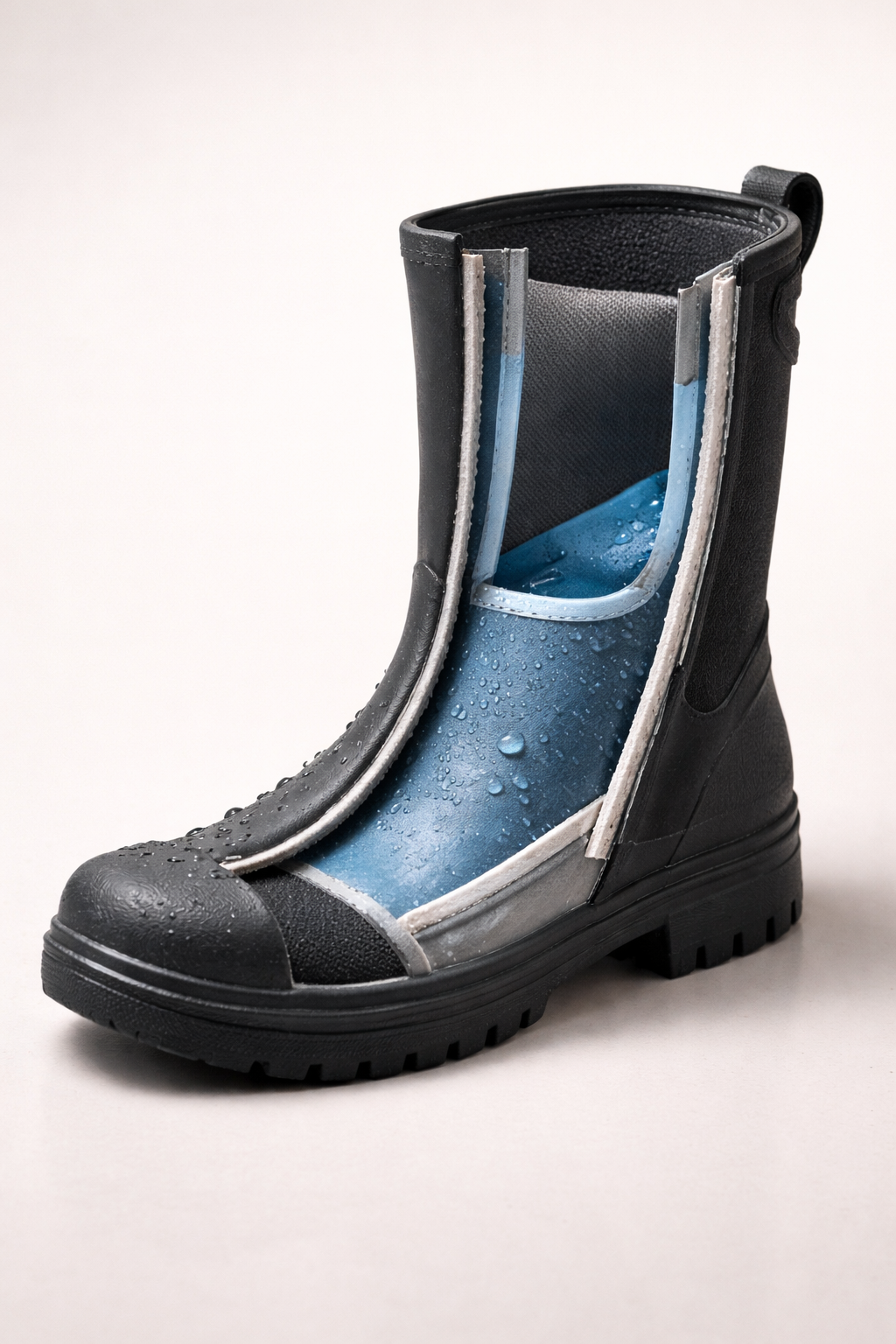
Internal Waterproof Linings and Booties
Some rain boots incorporate internal waterproof linings separate from the outer shell. These linings, often made of waterproof membranes like Gore-Tex, are sewn into a sock-shaped form called a "bootie" with all seams sealed using waterproof tape. This bootie is then inserted into the outer boot.
This construction approach offers several advantages: the outer shell can be made from materials that aren't inherently waterproof (like leather or canvas) while the internal bootie ensures waterproof protection. The space between the outer shell and inner bootie can provide insulation. And if the outer shell is damaged, the internal bootie may continue to provide waterproof protection.
Advanced Waterproof Technologies
Beyond traditional rubber construction, modern rain boots may incorporate advanced waterproofing technologies.
Gore-Tex and Microporous Membranes
Gore-Tex revolutionized waterproof footwear when it was introduced in hiking boots in the 1970s. The Gore-Tex membrane features billions of microscopic pores that are too small for liquid water droplets to pass through (about 20,000 times smaller than a water droplet) but large enough to allow water vapor molecules (from sweat) to escape (700 times larger than a water vapor molecule).
This solves one of rubber's biggest problems: breathability. While solid rubber is completely waterproof, it's also completely vapor-proof, trapping sweat inside the boot and leading to clammy, uncomfortable feet. Gore-Tex membranes keep external water out while letting internal moisture escape.
Gore-Tex is typically laminated with a high-performance lining and stabilizing backer, then formed into a bootie. The bootie's seams are sealed with specialized Gore-Tex seam tape, and the entire assembly is inserted into the boot.
Other manufacturers have developed similar microporous membrane technologies with different brand names but the same fundamental principle: microscopic pores that discriminate between liquid water and water vapor.
DWR (Durable Water Repellent) Treatments
DWR treatments are hydrophobic coatings applied to the outer surface of boot materials. These treatments don't make materials waterproof by themselves, but they cause water to bead up and roll off rather than being absorbed into the material.
For rain boots, DWR treatments serve several purposes. They prevent the outer material from becoming saturated and heavy. They help keep the boot cleaner since dirt and mud bead off along with water. And they extend the life of the outer materials by preventing water absorption that can degrade fabric, leather, or even rubber over time.
DWR treatments gradually wear off with use and cleaning, so they need periodic reapplication to maintain effectiveness.
Multi-Layer Waterproof Systems
Premium waterproof boots often employ multiple layers of protection:
- Outer Shell: Made from durable materials (rubber, leather, synthetic fabrics) treated with DWR
- Waterproof Membrane: Gore-Tex or similar microporous membrane
- Inner Lining: Moisture-wicking material to manage sweat
This layered approach ensures that even if the outer shell is damaged or saturated, the internal membrane maintains waterproof protection. The combination also optimizes the balance between waterproofing, breathability, insulation, and comfort.
Testing and Standards: How Waterproof is "Waterproof"?
Manufacturers use several standardized tests to verify waterproof performance.
Hydrostatic Head Testing
This test measures how much water pressure a material can withstand before leaking. A column of water is placed on the material, and the height of the water column (measured in millimeters) when water begins penetrating indicates the material's waterproof rating.
- 1,000mm+: Considered waterproof for most applications
- 5,000mm+: Highly waterproof, suitable for heavy rain and deep water
- 10,000mm+: Professional-grade waterproofing for extreme conditions
Quality rain boots should meet or exceed 1,000mm. Commercial-grade rain boots for fishing or industrial work often exceed 5,000mm.
Submersion Testing
Boots are filled with water or submerged to verify that no water penetrates. Some manufacturers test their boots by submerging them for extended periods to ensure long-term waterproof integrity.
Flex Testing
Since boots flex with every step, materials and seams must remain waterproof through thousands of flex cycles. Materials like RubberHE are tested to withstand over 1,000,000 flexes without cracking—ensuring the waterproof barrier remains intact throughout the boot's lifetime.
Factors That Affect Long-Term Waterproof Performance
Understanding what compromises waterproofing helps you maintain your boots properly.
Material Degradation
Exposure to UV light, ozone, oils, chemicals, and extreme temperatures gradually breaks down rubber and synthetic materials. The cross-links created during vulcanization can deteriorate over time, making rubber less flexible and more prone to cracking. Cracks provide pathways for water infiltration.
Quality rubber compounds include stabilizers and antioxidants to slow this degradation, but it's inevitable with time and use.
Seam Failure
Even properly sealed seams can eventually fail. The adhesive in seam tape breaks down, or the tape separates from the surrounding material. Stitched seams (if present) can develop gaps as thread wears or materials pull away.
Regular inspection of seams and prompt repair of any separation maintains waterproof integrity.
Punctures and Abrasions
Physical damage is the most common cause of waterproofing failure. A puncture creates a direct pathway through the waterproof barrier. Even small punctures can allow significant water infiltration. Abrasion gradually wears away material thickness until water can penetrate.
Thicker rubber and reinforcement in high-wear areas help prevent puncture and abrasion damage.
Improper Care
Certain cleaning products, particularly petroleum-based solvents, can degrade rubber and waterproof membranes. Storing boots in extreme heat or direct sunlight accelerates material breakdown. Folding or crushing boots can stress materials and create weak points.
Following manufacturer care instructions preserves waterproof performance.
Maintaining Waterproof Performance: Best Practices
Proper care extends the waterproof life of your rain boots significantly.
Regular Cleaning
Mud, salts, chemicals, and organic materials left on boots can degrade rubber and waterproof coatings. After each use, rinse boots with fresh water to remove contaminants. For stubborn dirt, use mild soap and a soft brush. Avoid harsh chemicals or high-pressure washing that could damage seams or coatings.
Drying Properly
Allow boots to air dry at room temperature. Never place rubber boots near direct heat sources (radiators, heaters, direct sunlight), as heat can cause rubber to crack or membranes to delaminate. Stuff boots with newspaper or boot shapers to help them maintain shape while drying and to absorb interior moisture.
Conditioning Rubber
Some manufacturers recommend applying rubber conditioner periodically to maintain flexibility and prevent cracking. These products typically contain oils that replenish the plasticizers in rubber compounds. Follow manufacturer recommendations, as some rubber types don't require conditioning.
Reapplying DWR Treatments
If your boots have fabric or leather components with DWR treatments, reapply waterproofing spray as needed (typically when water stops beading on the surface). Clean the boots first, let them dry, then apply the waterproofing product according to its directions.
Proper Storage
Store boots in a cool, dry place away from direct sunlight and ozone sources (electric motors generate ozone). Don't fold or compress boots—use boot shapers or stuff them with paper to maintain shape. Storing boots properly prevents premature aging of waterproof materials.
Prompt Repairs
At the first sign of damage—cracks, punctures, seam separation—make repairs. Waterproof repair adhesives and patches are available for minor damage. For more significant damage, professional repair services can often restore waterproof integrity.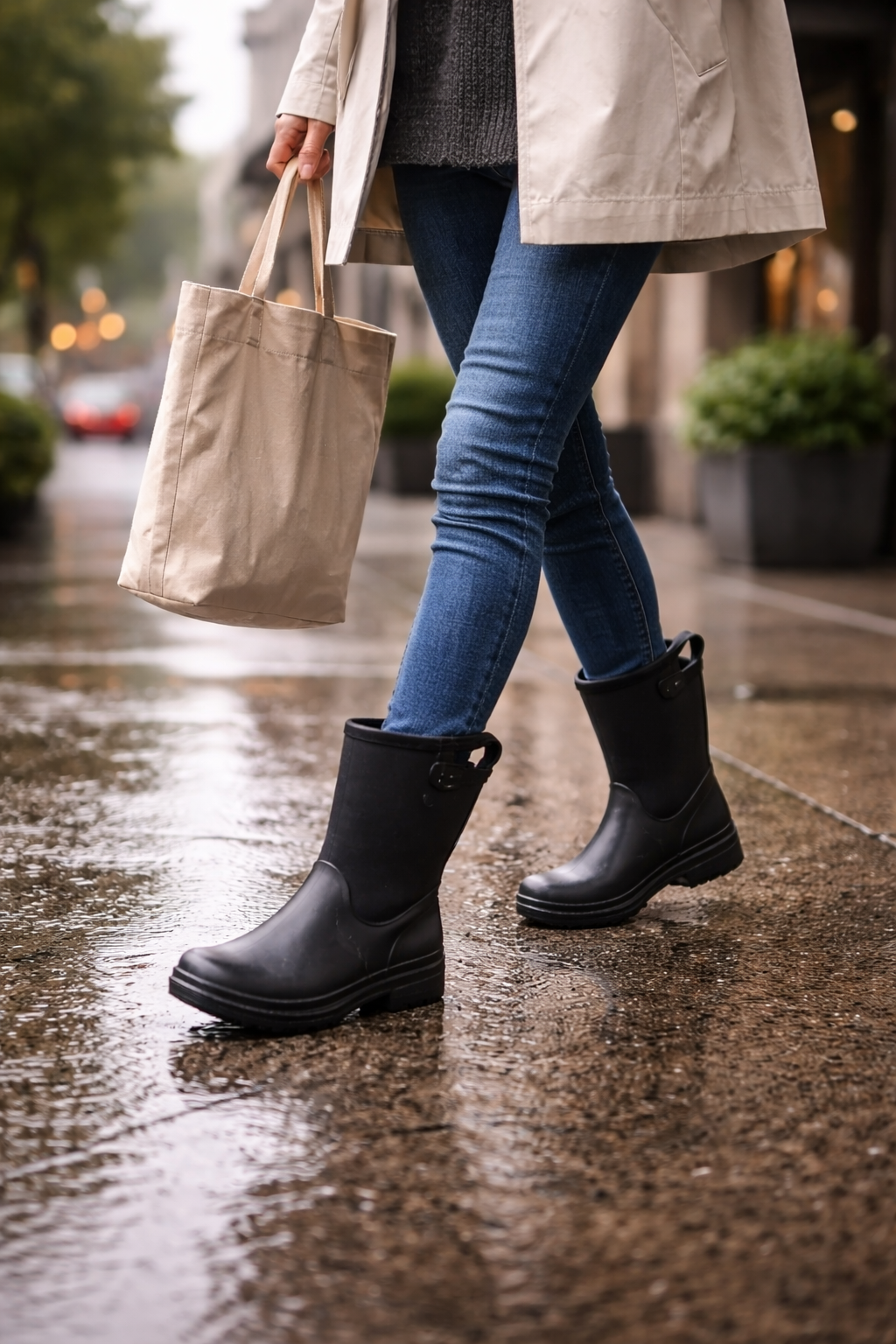
Choosing Truly Waterproof Rain Boots
When shopping for rain boots, look for these indicators of genuine waterproof quality:
Material Quality: Natural rubber or high-quality synthetic compounds (neoprene, proprietary formulations) outperform cheap PVC. Check product descriptions for material specifications.
Construction Method: Seamless, molded construction or vulcanized assembly provides better waterproofing than glued components. Look for terms like "injection molded," "vulcanized," or "seamless construction."
Seam Details: If seams are present, they should be fully sealed. High-quality boots will specify "seam-sealed construction" or "taped seams."
Height and Coverage: Taller boots provide more protection. Consider where water might enter based on how you'll use the boots. For deep puddles or snow, choose boots that extend well up your calf.
Brand Reputation: Established brands like BOGS, Kamik, and Xtratuf have reputations built on delivering genuinely waterproof boots. They've invested in perfecting materials and manufacturing processes.
Waterproof Ratings: Look for stated waterproof ratings or standards compliance. Boots tested to 1,000mm+ hydrostatic head are genuinely waterproof.
Care Requirements: Counterintuitively, boots that require minimal care often use lower-quality materials. Quality boots that will last years may require some maintenance to preserve waterproof performance.
The Future of Waterproof Technology
Waterproof boot technology continues evolving:
Sustainable Materials: Manufacturers are developing bio-based rubbers and recyclable synthetic compounds that match or exceed traditional materials' waterproof performance while reducing environmental impact.
Enhanced Breathability: New membrane technologies promise better vapor transmission without compromising waterproofing, addressing the eternal challenge of keeping feet dry from both external and internal moisture.
Smart Waterproofing: Research into materials that adapt their properties based on conditions could lead to boots that adjust their breathability and insulation while maintaining waterproof protection.
Self-Healing Materials: Some research explores materials that can seal minor punctures or abrasions automatically, extending waterproof performance.
Conclusion: Science Meets Everyday Comfort
The next time you pull on your rain boots and confidently step into a puddle, you can appreciate the remarkable science keeping your feet dry. From the molecular transformation that occurs during vulcanization to the precise engineering of microporous membranes, truly waterproof rain boots represent sophisticated applications of materials science and manufacturing technology.
Understanding what makes boots genuinely waterproof—quality materials, proper vulcanization, seamless or sealed construction, and advanced membrane technologies—empowers you to make informed purchasing decisions. You can distinguish marketing claims from genuine waterproof performance and invest in boots that will reliably protect your feet season after season.
Whether you need rain boots for commuting, gardening, outdoor work, or extreme conditions, knowing the science behind waterproofing helps you choose boots optimized for your specific needs. And with proper care guided by understanding how waterproof materials work, you can maximize the lifespan and performance of your investment.
Ready to experience genuinely waterproof rain boots backed by proven technology? Explore Schreter's collection of women's rain boots featuring premium brands that apply the science of waterproofing to keep your feet dry and comfortable in any weather. From advanced rubber compounds to innovative construction techniques, our curated selection represents the best in waterproof footwear technology.
Your feet deserve the protection that only truly waterproof boots can provide—boots engineered with the scientific precision to turn "rain ready" from a marketing phrase into a reliable promise.