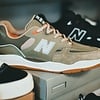

Navatex Boots: Do the Retractable Ice Cleats Really Work?

Key takeaways
- Navatex builds retractable cleats into the sole using the OC Grip system, an Italian-patented design with two positions.
- Grip-on drops the studs for ice, grip-off retracts them so you can walk indoors without clacking or scratching floors.
- That toggle solves the practical problem with strap-on ice grips, which people stop using because taking them on and off is a nuisance.
- The boots are insulated with 3M Thinsulate and rated to around minus 30 degrees Celsius, with a waterproof build.
- Navatex uses European sizing, 40 to 47 in men's, and the brand states its boots fit true to size.
Short answer: yes, and the reason they work is less about the cleats themselves than about the fact that you will actually use them. Plenty of ice traction products work well in testing and fail in practice because people leave them at home. Navatex builds the traction into the boot with a toggle, which removes that problem entirely. Here is what the system is and what to expect from it, on a brand you can find in our men's winter boots range.
What the OC Grip System Actually Is
The Navatex sole uses an Italian-patented setup the brand calls the OC Grip system, with studs built into a movable underfoot section. It has two positions: grip-on, where the studs sit proud of the sole and bite into ice, and grip-off, where they retract up flush so the boot behaves like a normal winter boot.
You switch between them with your foot rather than by bending down or removing anything. That mechanism is the whole point of the design, and it is what separates this from a strap-on ice grip you carry in a bag.

Why Retractable Beats Strap-On
Add-on ice cleats genuinely work on ice. The problem is everything either side of the ice. They are awkward to put on outdoors in the cold, dangerous on tile and hardwood once you go inside, and easy to forget. The result is that people buy them, use them twice, and leave them in a drawer.
A built-in retractable system changes the calculation because there is nothing to carry, nothing to fit, and nothing to remember. You toggle the studs down when you hit an icy stretch and toggle them up before you go into a shop. In practice that means traction that is available on the days you actually need it.
Warmth and Waterproofing
Traction is only useful on a boot you will wear all winter, so the rest of the build matters. Navatex insulates with 3M Thinsulate and rates its boots to around minus 30 degrees Celsius, which covers Montreal's coldest stretches comfortably. The construction is waterproof, which matters as much as insulation given how wet Montreal slush is by March.
Worth being realistic about temperature ratings generally: they assume you are moving. Standing still at a transit stop in minus 20 feels colder than walking in minus 30, whatever the number on the box says.

Sizing and Fit
Navatex uses European sizing rather than US, running 40 to 47 in men's. If you normally shop in US sizes this is the main thing to check before ordering, since the conversion is not always intuitive. The brand states its boots fit true to size, so your usual European size should be the right starting point, and you can adjust up or down based on how much room you want for thicker winter socks.
Thicker socks are worth factoring in properly. A winter boot that fits perfectly with a thin sock will feel tight with a wool one, and a boot that is too tight actually makes your feet colder by restricting circulation.
How It Compares to the Alternatives
There are three common ways to deal with ice underfoot, and they trade off differently. Strap-on cleats give you the most aggressive traction and work with boots you already own, but they need carrying, fitting in the cold, and removing indoors. Boots with aggressive rubber and fine siping handle packed snow and mild ice well and need no thought at all, but they reach a limit on genuinely smooth refrozen surfaces.
Built-in retractable cleats sit between the two. The traction is less aggressive than a dedicated strap-on crampon designed for ice fishing or trail use, and that is the honest trade. What you get instead is traction that is present every time you leave the house, with no extra step beyond a toggle. For everyday city walking, that availability matters more than peak grip, because the fall you avoid is the one on the morning you would not have bothered strapping something on.
Who These Make Sense For
The ice cleats earn their keep if your winter involves walking on surfaces nobody has cleared properly: side streets, older sidewalks, anywhere with a slope, or a commute that starts before the salt trucks have been through. If you drive door to door and walk on maintained paths, a conventional winter boot with good rubber will serve you fine and the cleats will mostly stay retracted.
They are also worth considering if you have had a fall, or you are cautious about ice for any reason. Confidence on an icy morning is worth a lot. For the broader question of what creates grip, our guide to non-slip winter boots covers the rubber and tread side, and once the season is under way our guide to salt damage covers keeping them intact.
Frequently Asked Questions
Do Navatex retractable ice cleats actually work?
Yes. The OC Grip system drops metal studs below the sole for ice and retracts them flush for indoor walking. The practical advantage over strap-on grips is that the traction is always with you, so you use it.
Can you walk indoors with Navatex boots?
Yes, with the cleats retracted. The grip-off position pulls the studs up flush with the sole, so the boot behaves like a normal winter boot on tile or hardwood.
How warm are Navatex boots?
They use 3M Thinsulate insulation and are rated to around minus 30 degrees Celsius, with waterproof construction. As with any rating, it assumes you are moving rather than standing still.
What size Navatex should I buy?
Navatex uses European sizing, 40 to 47 in men's, and states its boots fit true to size. Factor in thicker winter socks, since a boot that is too tight restricts circulation and makes your feet colder.
See the Cleats in Person
The toggle mechanism makes more sense in your hands than in a description, and thirty seconds trying it is worth more than any spec sheet. Come see us in store, we'll help you find the right fit, or browse Navatex, including the men's Navatex 2-Zip, and the rest of our men's winter boots online.