

Sneakers vs Running Shoes: What's the Real Difference

Key takeaways
- Every running shoe is a sneaker, but most sneakers are not running shoes. The difference is what the sole and midsole are built to handle.
- Running shoes are engineered around impact absorption and forward push. Everyday sneakers are built for looks, versatility, and all-day comfort.
- Running puts roughly three times your body weight through your foot each stride. Walking is closer to one and a half times.
- You can wear running shoes casually and many people do. The reverse, running in a casual sneaker, is where injuries start.
- If you are mostly standing or walking rather than training, cushioning and flexibility matter more than any performance spec.
The short answer: every running shoe is a sneaker, but most sneakers are not running shoes. A running shoe is engineered to absorb repeated impact and push you forward. An everyday sneaker is built for comfort, durability, and how it looks with what you wear. You can wear a running shoe casually without any trouble. Running in a casual sneaker is where people get hurt. Here is what actually separates them, and how to tell which one you need across our men's sneakers.
Sneaker Is the Category, Running Shoe Is the Job
Sneaker is a broad term. It covers court shoes, retro runners, skate shoes, canvas styles, and performance running shoes. What they share is a rubber sole and a soft upper. What they do not share is engineering intent. A running shoe sits inside the sneaker category the way a work boot sits inside boots: same family, built for a specific job.
That job is absorbing repeated impact at speed. Everything that makes a running shoe different, the foam, the shape, the sole geometry, follows from that one requirement. A court-style sneaker like the New Balance 480 has none of it, because it was never asked to do that job.
The Impact Difference That Drives Everything
Running sends roughly three times your body weight through your foot every stride. Walking is closer to one and a half times. That single number explains almost every design choice that follows. Running shoes need thick, responsive foam to absorb a force casual wear never generates. Everyday sneakers can use firmer, thinner cushioning, which keeps them lighter, flatter, and easier to wear with normal clothes.
This is why a casual sneaker feels fine for a day of errands and punishing after three kilometres of running. It is not a quality problem. It is a build problem.

Where Walking Shoes Fit In
Walking shoes sit between the two. They carry more support than a casual sneaker but less cushioning than a running shoe, and they are built for the way walkers move: heel strike, then a smooth roll forward through the whole foot. That is why a walking shoe should bend easily at the ball of the foot, while many running shoes are stiffer through the sole and use a curved rocker shape that tips you forward instead of flexing.
You can test this in the store. Hold a shoe at both ends and press. A walking shoe folds at the forefoot. A running shoe resists and wants to rock. A casual sneaker usually sits somewhere in between, flexible but without much underfoot.
Heel-to-Toe Drop, and Why It Shows Up Here
Drop is the height difference between a shoe's heel and its forefoot. Running shoes typically sit higher at the heel and slope down toward the toe, which suits how runners land. Walking shoes and casual sneakers tend to be flatter and more even. Neither is better in the abstract, it depends on what you are doing. New Balance's Fresh Foam X 1080, for example, uses a 6 mm drop with a rocker profile, a build aimed at running miles rather than standing shifts.
Can You Wear Running Shoes Casually?
Yes, and it is extremely common. Running shoes usually carry more cushioning than any casual sneaker, and that softness feels good on long walks and all-day wear. Some people find heavily cushioned running shoes too soft for standing still and feel slightly unstable in them, which is a real effect worth testing before you commit.
The reverse is the pairing to avoid. A casual sneaker does not have the impact absorption running demands, and running in one regularly is a reliable way to end up with shin or heel pain. If you do both often enough to notice, two pairs is the honest answer.
What to Prioritise If You Are Mostly on Your Feet
Plenty of people buying sneakers are not training at all. They are standing, commuting, working a shift, or walking a city. If that is you, the running-versus-casual question matters less than three things:
- Cushioning that stays comfortable over hours, not minutes.
- A sole that flexes where your foot flexes.
- A fit with enough room that your foot is not fighting the shoe by afternoon.
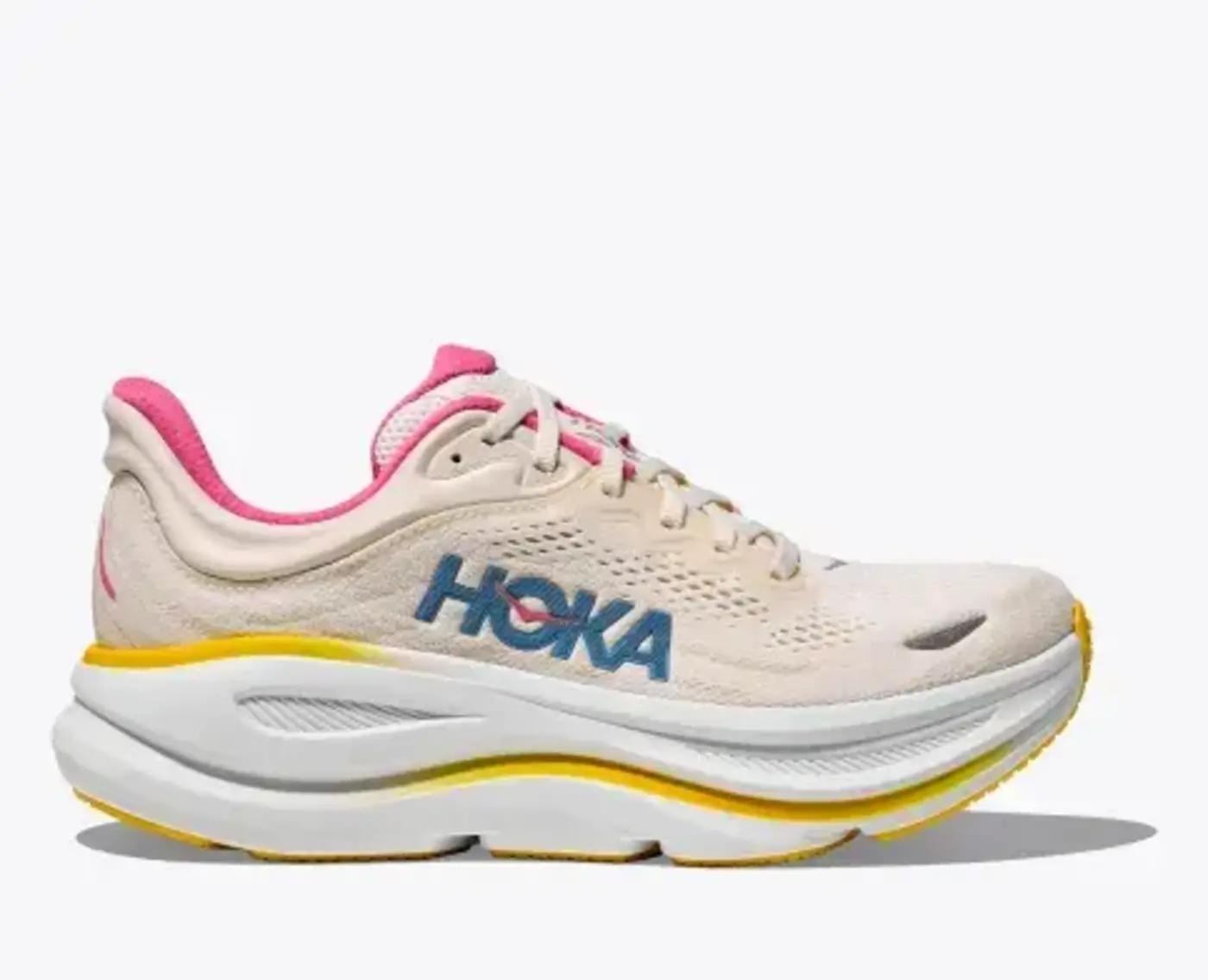
Several models are built for exactly this overlap. HOKA lists the Bondi as suited to everyday running, walking, and comfort, which is the brand acknowledging that most buyers are not only running. Across our HOKA and New Balance range, most of what sells moves between all three uses rather than living in one.
How to Decide in the Store
Bring the socks you will actually wear. Try both categories on and walk, do not just stand. Press the forefoot to see where the shoe bends. Notice whether the cushioning feels supportive or vague underfoot. And be honest about the split: if you run twice a week and walk every day, buy for the walking and treat the running as a bonus, or buy two pairs.
Sizing is the other half of this decision, and it varies more between brands than most people expect. Our HOKA sizing guide covers what to expect there, including when to change width instead of size.
Frequently Asked Questions
What is the difference between sneakers and running shoes?
Sneaker is the broad category, covering court shoes, casual styles, and running shoes alike. A running shoe is a sneaker engineered specifically to absorb repeated impact and push you forward, with thicker cushioning and a sole shaped for running rather than standing.
Can I wear running shoes as everyday sneakers?
Yes. Running shoes generally have more cushioning than casual sneakers, which many people prefer for long walks and all-day wear. Some find them too soft and slightly unstable for standing, so test them by walking, not standing.
Is it bad to run in regular sneakers?
It is the pairing to avoid. Casual sneakers lack the impact absorption running requires, and running in them regularly can lead to shin, heel, or joint pain.
Do I need separate shoes for running and everyday wear?
If you run enough to notice, yes. If running is occasional and daily wear is the main use, buy for the daily wear and use the same pair for both.
Try Both On
Specs only get you so far. How a shoe feels when you walk in it is the part that decides. Come see us in store, we'll help you find the right fit across our men's sneakers and men's casual shoes range.