

HOKA Sizing: Do They Run True to Size?

Key takeaways
- HOKA generally runs true to size for length. The common complaint is width across the forefoot, not length.
- If a HOKA feels right in length but tight at the sides, the fix is a wider version of the same size, not a bigger size.
- HOKA offers EE wide options on several models, including the Clifton and the Transport.
- On fits the narrowest of the major cushioned brands through the midfoot, so wide feet often need to look elsewhere in the lineup.
- Sizing shifts between models within the same brand, so treat any brand-level rule as a starting point rather than an answer.
The short answer: yes, HOKA runs close to true to size for length. Most people take their normal size and it fits. What catches people out is width, since HOKA's heavily cushioned builds wrap the foot closely and a wider forefoot will feel the sides of the shoe before the end of it. Here is what to expect from HOKA sizing, how On compares, and how to tell a width problem from a length problem, across our men's sneakers.
Does HOKA Run True to Size?
For length, generally yes. If you wear a 10 in most brands, a 10 in HOKA will usually be right. The brand is consistent enough across its range that your size in one model is a reliable starting point for another.
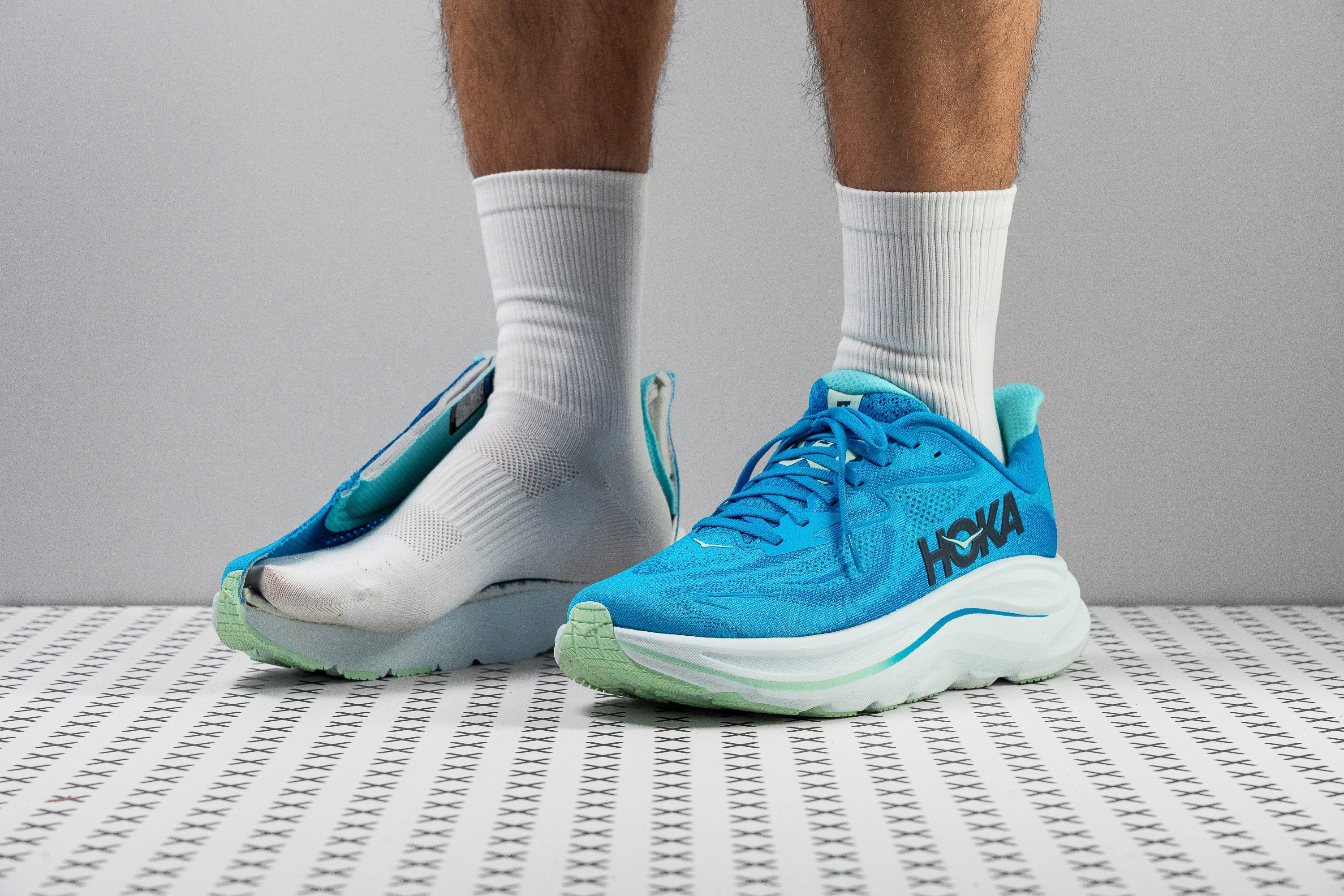
The recurring issue is the toe box. HOKA builds a lot of cushioning into its midsoles, and the upper wraps closely around the foot to keep you stable on top of all that foam. If your forefoot is wider than average, you will feel pressure at the sides well before your toes reach the end of the shoe. That is a width problem wearing a length problem's clothes, and sizing up is the wrong fix for it.
HOKA Width Options and When You Need Them
HOKA offers EE wide versions on several models, including the Clifton and the Transport, which is the brand acknowledging the forefoot issue directly. If a shoe feels correct in length but tight across the ball of your foot, try the wide version of the same size before you go up half a size.
The difference matters more than people expect. Going up a size to solve a width problem gives you a shoe that is too long and still too narrow, which means your heel slips as you walk and your foot slides forward on every step. You end up with two problems instead of one.
How On Compares
On fits snug through the midfoot, and runs narrower than HOKA. For a narrow or average foot that is usually a good thing, the shoe feels locked in and secure. For a wider foot it is the more likely of the two to be a problem, and On offers fewer width alternatives.
Length is generally close to true to size, with some variation between models. On's cushioned models tend to feel roomier than their firmer, performance-focused ones, so a size that works in one may feel different in another.
HOKA Size Chart: How to Read It
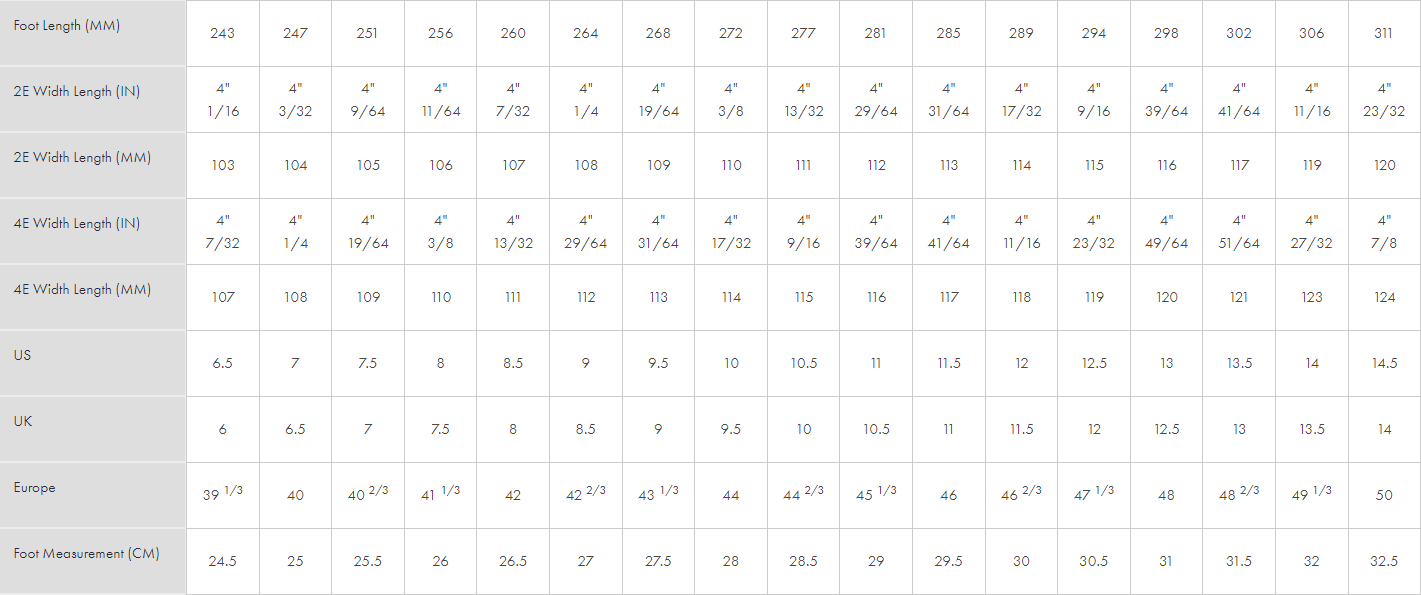
HOKA publishes a size chart on its own site, and it is worth checking before you order, but a chart only tells you length. It converts a foot measurement in centimetres or inches into a US, UK, or EU size, and that is genuinely useful if you have never bought the brand before or you are ordering from outside your usual region.
What a size chart cannot tell you is width, and width is where most HOKA fit problems actually live. Two people with identical foot length can need different shoes, because one has a wider forefoot than the other. If you measure your foot against the chart and the shoe still feels tight at the sides, the chart was not wrong, you need a different width in the same size.
A practical way to use it: measure your longest foot in centimetres while standing, late in the day, with the socks you plan to wear. Match that to the chart for your starting length. Then treat width as a separate decision, based on how the shoe actually feels across the ball of your foot.
Telling a Width Problem From a Length Problem
Most sizing complaints turn out to be width problems. The signs are specific:
- Too narrow: pressure or rubbing at the sides of the forefoot, marks on the side of your foot after wearing, or the upper visibly bulging over the sole.
- Too short: your toe touches the end when you walk downhill or push off, or your toenails take a beating over longer distances.
- Too long: your heel lifts out of the shoe as you walk, or your foot slides forward on every step.
Learn the width codes while you are at it. D is standard men's width, 2E is wide, and 4E is extra wide. If you have spent years assuming your feet are awkward, there is a reasonable chance you have simply been in the wrong width the whole time.
What to Check When You Try Them On
- Wear the socks you actually plan to wear with them.
- Leave roughly a thumb's width between your longest toe and the end of the shoe.
- Walk, do not just stand. Fit problems show up in motion.
- Check the sides of your forefoot for pressure before you check the length.
- Try both feet. Most people have one slightly larger, and the bigger one sets your size.
Ordering Online Without Guessing
If you are buying online rather than in person, a few things reduce the risk. Start from a model you already own in that brand, since brand-level consistency is more reliable than guessing across brands. Check whether the model comes in multiple widths, because if it does, that usually means the standard fit runs narrow enough that the brand felt the need. Read the description for words like snug, wrapped, or performance fit, which generally mean less room than a model described as roomy or cushioned.
Feet also swell through the day, so a shoe fitted first thing can feel tight by late afternoon. Size for the end of the day, not the start of it. If you are comparing across brands rather than within HOKA, our New Balance sizing guide covers how their fit differs, and it is the brand with the widest range of width options.
Frequently Asked Questions
Do HOKA shoes run true to size?
For length, generally yes. Most people take their normal size. The more common issue is width across the forefoot, since HOKA's cushioned builds wrap the foot closely.
Should I size up in HOKA?
Usually not. If the length feels right but the sides feel tight, try the wide (EE) version of the same size instead. Sizing up to fix a width problem leaves you with a shoe that is too long and still too narrow.
Where can I find a HOKA size chart?
HOKA publishes one on its own site, converting a foot measurement into US, UK, or EU sizing. It gives you length only. Width is a separate decision, and it is where most HOKA fit problems actually come from.
Which HOKA models come in wide?
HOKA offers EE wide options on several models, including the Clifton and the Transport. Availability varies by model and colourway, so it is worth checking the specific pair you want.
Do On shoes fit the same as HOKA?
No. On fits narrower through the midfoot than HOKA. Length is broadly similar, but wide feet will notice the difference, and On offers fewer width alternatives.
Get Measured Properly
Brand rules are a starting point, not an answer. The only way to know your size in a specific model is to put it on. Come see us in store, we'll help you find the right fit across our men's footwear range, widths included.