
The Most Comfortable Rain Boots for Walking All Day: What to Look For

Key Takeaways
- The most common reason rain boots hurt after a few hours is the lack of a real midsole. Raw rubber transmits pavement impact directly to your foot. A boot with an EVA or PU midsole absorbs that impact properly.
- Heel slip is the second major comfort issue. If your heel moves inside the boot with every step, it causes blisters and hip fatigue. A snug heel cup or adjustable calf strap fixes this.
- Bogs are the top recommendation for all-day walking: Neo-Tech neoprene construction, cushioned insole, and weight that is significantly lower than traditional rubber boots.
- The Xtratuf Wheelhouse series was specifically engineered for commercial fishermen standing for 12-hour shifts. The wider commercial fit and EVA/PU insole make it one of the most comfortable options for hard-surface all-day wear.
- A removable footbed is the single most underrated feature in rain boots. It lets you swap in a custom insole for your specific foot, which no off-the-shelf boot can fully replace.
Most rubber boots are uncomfortable after two hours on pavement. That is not an opinion. It is a design reality that most brands do not address honestly. Traditional rubber boot construction puts raw rubber or a thin flat insole between your foot and the ground. On a soft field or muddy terrain, your body absorbs the impact. On pavement, concrete, or hard warehouse floors, every step transfers directly to your joints.
The good news is that several brands have solved this problem. The difference between a boot you can wear all day and one that makes your feet ache by noon comes down to a few specific features. This guide tells you exactly what they are and which boots have them.
Why Most Rain Boots Are Uncomfortable for Long Walks
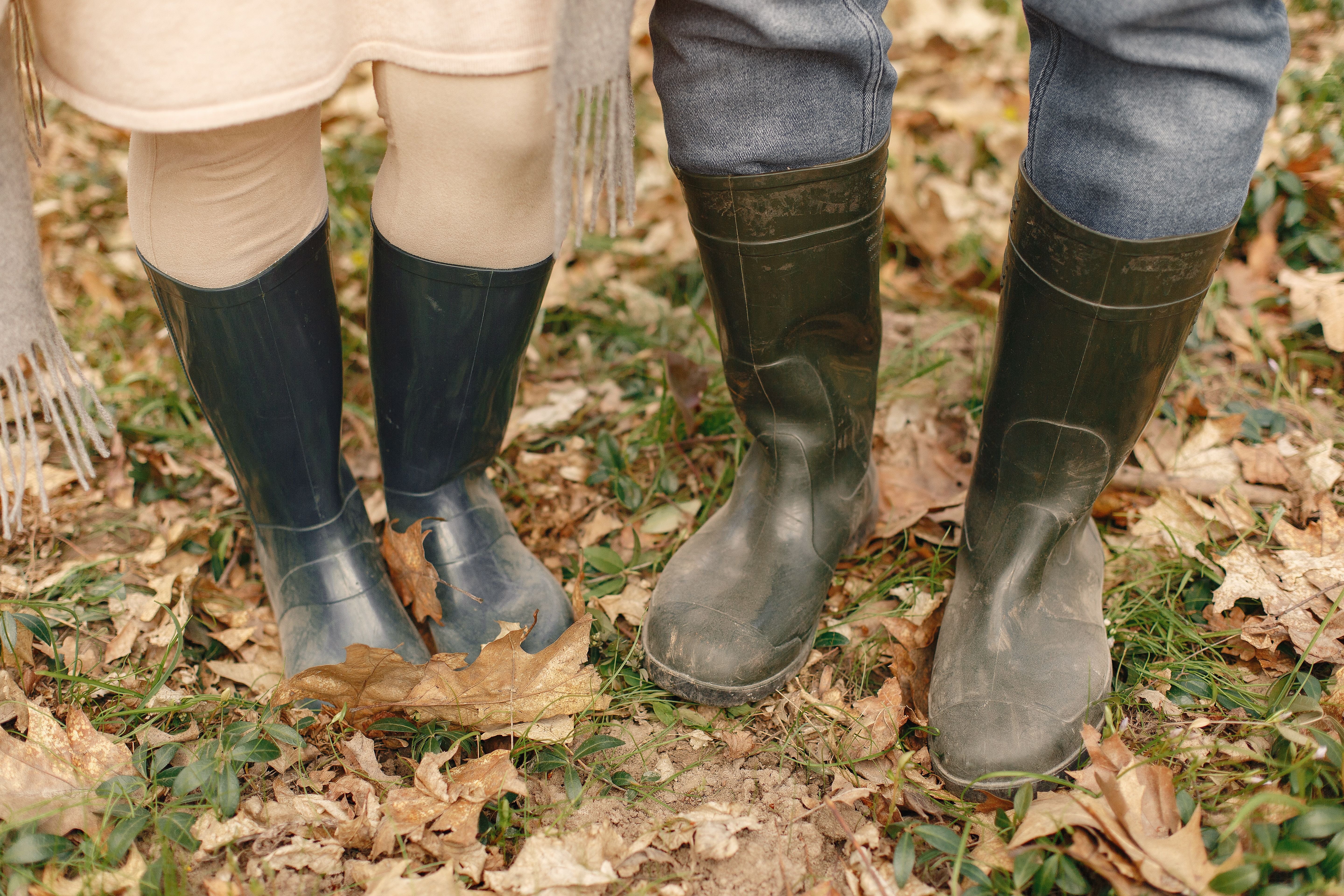
The core issue is that traditional rubber boot construction prioritizes waterproofing over comfort. A rubber shell is excellent at keeping water out. It is not inherently designed to cushion impact, support the arch, or reduce foot fatigue over distance. The original rubber boot was designed for standing in wet fields, not walking ten kilometres on pavement.
Three specific problems cause most of the discomfort:
- No real midsole: a traditional rubber boot has rubber at the bottom and a thin flat insole inside. The midsole layer, the cushioning compound between the outsole and your foot, is missing or minimal. Running and hiking boots have engineered midsoles because that layer is what absorbs pavement impact. Without it, the impact goes to your feet and joints.
- Heel slip: rubber boots are designed to be easy to pull on and off. That wide entry means the heel often has room to lift slightly with each step. Multiply that by thousands of steps and you get blisters on the back of the heel and hip fatigue from compensating with your gait.
- Rigid sole: a sole that does not flex at the ball of the foot forces your foot to work against the boot rather than with it. Over a long walk, your calf muscles do extra work compensating for the inflexibility.
The Features That Actually Fix the Problem
The Midsole: The Most Important Feature
This is the most important feature to look for. EVA (ethylene-vinyl acetate) and PU (polyurethane) are the same foam compounds used in quality running shoes. They compress under load and spring back, absorbing pavement impact rather than transmitting it. A boot with an EVA or PU midsole feels noticeably different from one without it: softer underfoot, less fatiguing over distance.
Bogs incorporates cushioned midsoles across their performance lineup. Xtratuf's Wheelhouse series uses an EVA/PU blend insole specifically developed for the demands of standing on hard surfaces for extended periods. When evaluating any rain boot for walking comfort, press your thumb into the insole. If it is firm and barely compresses, it is not going to help you.
Heel Hold: The Hidden Comfort Factor
A heel cup is a raised, shaped area at the back of the insole that holds the heel in place. It reduces the side-to-side movement that causes blisters and keeps your foot positioned correctly so your arch support functions as intended. Many basic rain boots have a flat insole with no heel cup. Better boots, particularly those adapted from performance footwear, have a defined heel geometry.
Removable Footbed: More Useful Than It Sounds
A removable insole means you can replace it with a custom orthotic or a higher-quality aftermarket insole. This single feature makes more difference for all-day comfort than almost any other boot specification. If you already use custom orthotics for your feet, a removable insole is not optional. It is required.
Kamik includes removable footbeds in most of their men's rain boot lineup. Bogs' higher-tier models also feature removable insoles. Xtratuf's commercial models accommodate aftermarket insoles given the wider commercial fit.
Weight: It Adds Up Over Distance
A heavier boot fatigues your legs faster. This is the same principle as any footwear for distance: every ounce on your foot multiplies across thousands of steps. Traditional full-rubber boots are among the heaviest footwear you can wear. Neoprene construction, like Bogs' Neo-Tech, reduces weight significantly while maintaining full waterproofing.
Sole Flexibility: Test Before You Buy
Flex the boot lengthwise. It should bend at the ball of the foot with moderate resistance. A completely rigid sole means the boot is not designed for walking. The Xtratuf Chevron outsole's compound stays flexible at low temperatures rather than stiffening in the cold, which is a real advantage in Montreal's spring shoulder season.

The Brands That Get This Right
Bogs: Best Overall for All-Day Walking
Bogs is the recommendation that comes up most consistently for all-day comfort among men who wear rain boots for work or extended outdoor use. The Neo-Tech neoprene is lighter than rubber. The cushioned midsole is genuine, not a marketing claim. And the boots come with a removable footbed. For city commuters and buyers who need a rain boot for regular walking, Bogs at Schreter's is the starting point.
Xtratuf Wheelhouse: Best for Hard-Surface Standing and Walking
The Wheelhouse series was designed for commercial fishermen who stand for 12+ hour shifts on hard boat decks. That engineering translates directly to anyone on their feet all day on hard surfaces. The wider commercial fit accommodates foot swelling during long shifts, something most boots do not account for. The EVA/PU insole provides real cushioning, not just a gesture toward it. For professional use or anyone who needs maximum hard-surface comfort, the Wheelhouse is the Xtratuf model to look at. See Xtratuf at Schreter's for current models.
Kamik: Best Mid-Range Option for Everyday Walking
Kamik's men's rain boots include removable footbeds on most models, which is a meaningful advantage at their price point. The GROUND-CTRL rubber compound stays flexible in cold temperatures, meaning the sole bends with your foot rather than working against it on cold spring mornings. For buyers who want reliable all-day comfort without paying Bogs prices, Kamik at Schreter's delivers it.
One More Thing: Try Them With the Socks You Will Actually Wear
This matters more than most people expect. A thick wool sock changes the fit of a rain boot significantly. If you try boots in store with thin socks and then wear them with your usual thick hiking or work socks, the heel may slip and the toe box may feel tight. Try the boots with the same sock weight you plan to wear them with.
For men using custom orthotics: remove the boot's insole entirely before inserting your orthotic. Layering an orthotic over a stock insole raises your foot position in the boot and often causes the heel to slip even more. The removable insole feature is specifically designed for this.

Shop Men's Rain Boots at Schreter's
Browse the full men's rain boots collection at Schreter's to see current Bogs, Kamik, and Xtratuf options. Women's versions of most of these models are available in our women's rain boots collection. If you are still deciding which type of wet-weather boot you need, our guide on rain boots vs. waterproof boots vs. winter boots covers that clearly. And if you want the full brand-by-brand comparison for men, our breakdown of the best men's rain boots in Canada has all the detail.