
Rain Boots vs. Waterproof Boots vs. Winter Boots: Which Do You Actually Need?
Key Takeaways
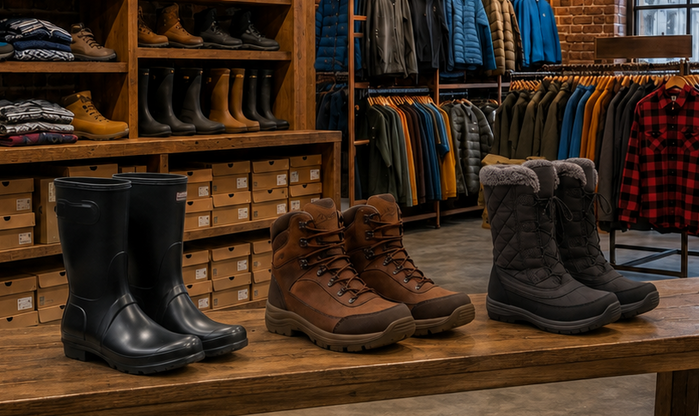
- Rain boots are rubber or neoprene shells, 100% waterproof by construction, designed for standing water and wet conditions. No insulation by default.
- Waterproof boots are leather or textile boots treated with a membrane (Gore-Tex or similar). They handle rain and light wet conditions but are not designed for submersion.
- Winter boots are insulated, waterproof footwear built for sustained cold: snow, slush, and sub-zero temperatures. Not all winter boots are rubber, and most are not designed for standing water.
- The most common mistake: buying a waterproof leather boot when you need a rain boot. A membrane boot will eventually saturate if the water is deep enough or the exposure long enough. A rubber boot will not.
- For Montreal specifically: you likely need all three types across the year, but for spring mud season and heavy rain, a rubber rain boot is the only option that is genuinely unlimited in wet exposure.
You are shopping for wet-weather footwear and you keep seeing three different things called different names: rain boots, waterproof boots, waterproof leather boots, rubber boots, winter boots with waterproof ratings. They are not the same product. Choosing the wrong one for your conditions is a very common and very fixable mistake.
This guide explains the actual difference between all three, when each one is the right choice, and what Montreal's specific conditions mean for that decision.
Rain Boots: What They Do That Other Boots Cannot
A rain boot (also called a rubber boot or Wellington boot) is a boot whose waterproofing is the material itself. The upper is made from rubber or neoprene, which is inherently waterproof. There are no seams for water to enter through, no membrane that can degrade over time, no treatment that washes out. You can stand in a puddle for an hour and your feet will be dry.
The key brands in the rubber boot category are Bogs, Kamik, and Xtratuf. Each uses a different rubber or neoprene construction, but all share the same fundamental property: unlimited wet exposure without saturation. For a deeper look at what makes rain boot waterproofing work, our guide to waterproof materials covers the technical side.
The trade-off: most uninsulated rain boots are not warm boots. They keep water out but do not trap heat the way an insulated winter boot does. For spring and fall, that is fine. For sustained sub-zero temperatures, you need insulation.

Waterproof Boots: Good for Rain, Not for Puddles
A waterproof boot is a leather or textile boot with a waterproof membrane, usually Gore-Tex or a proprietary equivalent, that prevents water from penetrating the upper. The membrane is a thin layer laminated inside the boot that allows vapor to escape while blocking liquid water from entering.
Waterproof boots are excellent for:
- Walking in rain on dry pavement
- Light wet conditions where the boot is not submerged
- Cold wet weather where you want a warmer, more shoe-like feel than a rubber boot
They are not the right choice for:
- Standing in water or puddles deeper than the boot's seam height
- Repeated heavy exposure, which reduces membrane effectiveness over time
- Spring mud conditions in Montreal where boots sink into soft ground and water enters over the top
The confusion happens because manufacturers market leather boots with Gore-Tex as "waterproof boots" and they are, within limits. A rubber rain boot is waterproof without limits. They are not the same product.
Winter Boots Are Not Rain Boots: Here Is Why That Matters
A winter boot is an insulated boot designed for sustained cold temperatures, typically rated to at least -20°C for Canadian use. Most quality winter boots are also waterproof, but their waterproofing serves a different purpose: keeping dry in snow and slush rather than handling submersion in standing water.
The primary function of a winter boot is thermal protection. The insulation rating matters more than the waterproofing specification for true winter use. Kamik and Bogs both make winter boots alongside their rain boot lines, and the products are engineered differently even when they look similar.
Browse men's winter boots at Schreter's here: men's winter boots.

Which Boot Handles What: A Practical Breakdown
| Condition | Rain Boot | Waterproof Boot | Winter Boot |
|---|---|---|---|
| Standing water / puddles | Yes, a rubber rain boot handles this without limits | No, a waterproof leather boot will saturate if submerged long enough | No, not designed for this at all |
| Heavy rain on pavement | Yes | Yes | Yes, overkill unless it is also cold |
| Spring mud and slush | Yes | Limited | Limited |
| Cold rain near 0°C | An insulated rain boot works well | A waterproof boot with a warm lining works | A winter boot is appropriate if temperatures drop further. |
| Sub-zero temperatures | With insulation | Depends on lining | Yes, primary use case |
| All-day walking on pavement | Better rain boot models with cushioned midsoles handle it well | Generally yes, they are designed with walking in mind | Generally yes, designed for walking |
| Work on wet/oily surfaces | Best, rubber rain boot is the only category with SRC-rated slip resistance options | No | No |
What Montreal's Seasons Actually Require
Montreal has four distinct footwear seasons, and the rain boot sits in a specific window within them:
- November to March: winter boots. Temperatures consistently below zero, snow and packed ice. Rain boots without serious insulation are uncomfortable in sustained cold.
- March to May: this is rain boot season. The freeze-thaw cycle produces standing water, deep puddles, and mud conditions that no leather or textile boot handles reliably. A rubber boot is the only right answer for spring in Montreal.
- May to October: waterproof leather or trail boots handle most conditions. Heavy rain days still favour a rubber boot, but most buyers rotate to lighter footwear for this period.
- October to November: transition period. First wet snow and cold rain. A lightly insulated rain boot or a waterproof leather boot with warm socks handles this window well.
Which One Should You Buy?
The honest answer for most people in Montreal is: you need all three at some point across the year, but they serve different seasons. A rubber rain boot is not a winter boot. A winter boot is not a rain boot. A waterproof leather boot does the work in between.
If you are shopping for spring and rain use right now, the men's rain boots collection is the right place to start. If you want help choosing between specific models, our guide on the best men's rain boots in Canada covers Bogs, Kamik, and Xtratuf in detail. And if comfort over a full day of walking is your main question, we address that specifically in our breakdown of the most comfortable rain boots for walking all day.